
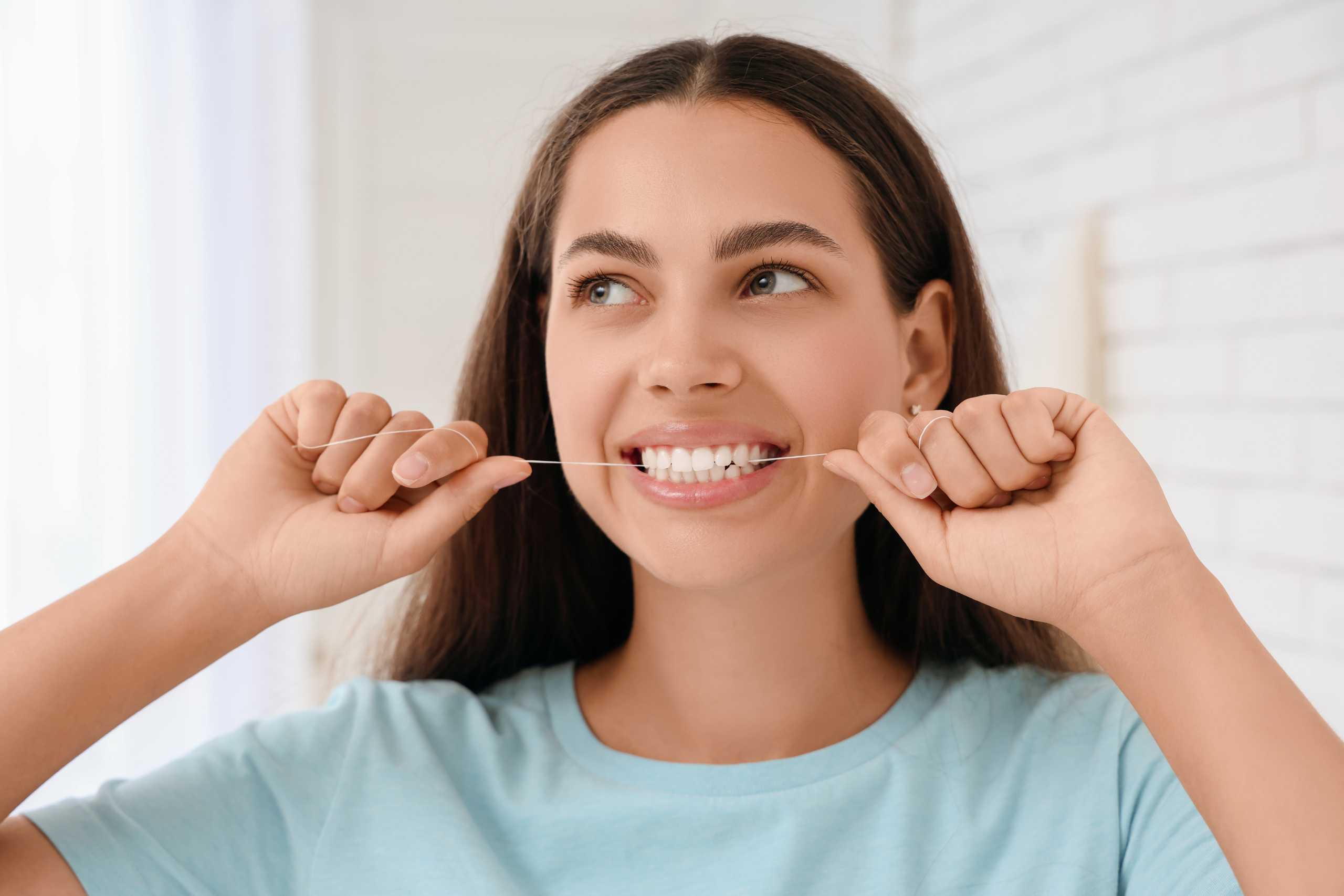
You probably already know that brushing twice a day is essential for a healthy smile. But when it comes to orthodontic oral hygiene, brushing alone isn’t enough. Flossing plays a really important role in preventing gum disease, tooth decay, and long-term oral health issues. That’s especially true for those of you with braces or Invisalign!
At Ethos, we see firsthand how consistent flossing makes a difference in treatment outcomes and overall dental health. Let’s break down why flossing your teeth is just as important as brushing.
Why Flossing Matters for Oral Health
When you brush your teeth, your toothbrush cleans the visible surfaces of your teeth, but it can’t reach between them or under the gumline. These tight spaces are where plaque and food particles build up most easily.
Without flossing, plaque can harden into tartar, increasing your risk of gum inflammation, cavities, bad breath and long-term gum disease.
Regular flossing helps remove debris before it builds up, hardens and causes damage. A regular oral cleaning routine of flossing and brushing supports healthy gums and stronger teeth.
Why Flossing Is Even More Important for Orthodontic Oral Hygiene
Orthodontic appliances like braces create extra surfaces where plaque can hide. This makes orthodontic oral hygiene especially important during your treatment!
When plaque isn’t removed effectively, it can lead to white spot lesions, tooth decay, or gum problems. What most people don’t realise is that these issues may still be visible after braces are removed. Flossing daily helps protect your smile both during and after treatment.
How to Floss With Braces
Flossing with braces can be a little challenging at first, but it’s really all about technique and using the right tools! Challenging at first, but it’s completely achievable with the right tools and technique.
We recommend considering these three options for flossing with braces:
- Use a floss threader to guide floss under the wire. This can be a little tricky if you aren’t used to flossing but it is one of the more effective options.
- Use an interdental brush like a Pikster. This is often most comfortable for kids and adults that aren’t confident with floss, but it can be really tricky to get into tighter spots at the back of your mouth without bending and breaking the brush.
- Invest in a water flosser. These are great for those that don’t like the feeling of something physical between their teeth, but they are a bit expensive to buy upfront and not super travel-friendly.
Take your time and be gentle around brackets and wires. Daily flossing, even if it takes a little longer, is one of the most effective ways to prevent complications during orthodontic treatment.
How to Floss with Invisalign
One of the big advantages of Invisalign is that aligners are removable. So the good news is that you can floss normally following these steps:
- Remove your aligners before brushing and flossing
- Gently slide the floss between each tooth
- Curve the floss around the tooth and clean below the gumline
- Repeat for every tooth
Even though Invisalign makes cleaning easier, daily flossing is still essential to prevent plaque buildup while aligners are worn.
Tips for Building a Flossing Routine
Developing strong flossing habits protects your teeth and supports the success of your orthodontic treatment. Patients who maintain excellent oral hygiene often experience fewer complications and better final results.
Here are our top tips for building a flossing habits early in your treatment
- Keep floss visible as a reminder
- Floss at the same time each day. Decide if morning or night is more convenient for you and stick to it!
- If you find yourself avoiding flossing, pair it with something fun like listening to your favourite song.
A Healthier Smile Starts Between Your Teeth
Brushing cleans what you can see. Flossing protects what you can’t.
Making flossing a daily habit helps keep gums healthy, teeth strong, and your smile looking its best.
For personalised advice on flossing with braces or Invisalign, speak with the team at Ethos at your next appointment. And if you’re considering orthodontic treatment, Ethos Orthodontics will guide you through every step, with a tailored treatment plan that clearly outlines what to expect and how long your braces may be needed.
Take the first step toward a confident new smile today.
👉 Book your consultation with Ethos Orthodontics
Frequently Asked Questions
Why is flossing important?
Flossing removes plaque and food from between your teeth and under the gumline, where your toothbrush can’t reach.
Why is flossing important if I have braces?
Braces trap food and plaque more easily, increasing the risk of decay and white spots if flossing is skipped.
How often should I floss?
Once a day is enough. Consistent daily flossing is more important than how long you floss for.
Can I floss normally with Invisalign?
Yes. Invisalign aligners are removable, so you can floss just like you would without orthodontic treatment.
Who can help me if I’m unsure how to floss properly?
Your orthodontic team can show you the best technique for your braces or aligners. Speak to our friendly ethos team at your next appointment!
How do I floss with my retainer?
Cleaning around your retainers takes a bit of practice, but it gets easier with time! Check out our step-by-step flossing instructions.